

Published on
5 signs your communication workflows are ready for AI agents
Communication that makes an impact
5 signs your communication workflows are ready for AI agents
When the prompt ends, the real work often begins
Generative AI has already made many tasks in Corporate Communications faster. A first draft, a summary, or a new content variation can now be created in minutes. But the most time-consuming parts of the communication process often come next: gathering information, involving stakeholders, incorporating feedback, aligning messages, and turning them into consistent content for different audiences and channels.
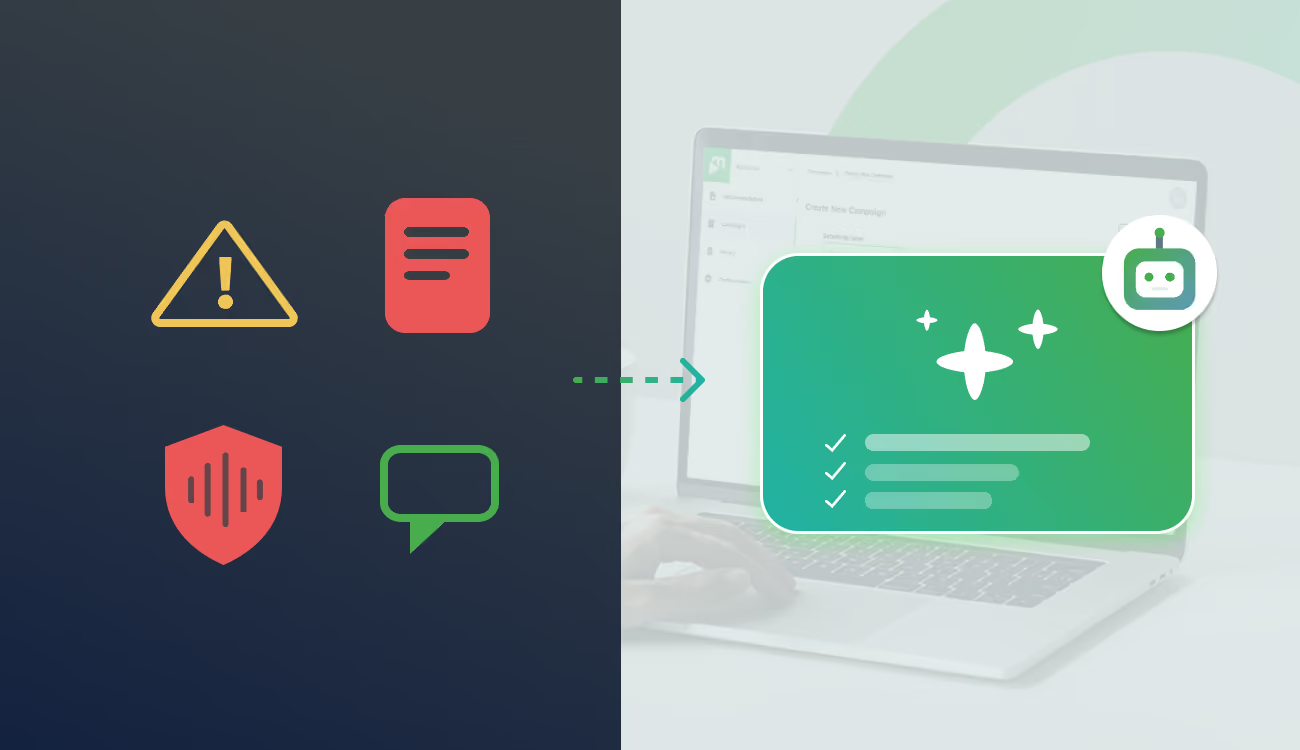
This is exactly where AI agents come in. Rather than supporting isolated tasks, they can take on defined roles and steps within a communication process and connect them into a more cohesive workflow. So how do you know whether your workflows are ready for this next step? These five signs are a good indicator.
1. The message is written quickly – but getting everyone aligned takes much longer
The first draft is ready. And that’s when the real work begins. Leadership wants to change the wording, Legal has questions, HR brings in another perspective, and Brand makes sure everything stays consistent with your corporate communication standards. Feedback arrives through different channels, new versions emerge, and what looked like a simple review quickly turns into multiple rounds of alignment.
If this sounds familiar, your biggest opportunity for efficiency may not be in content creation at all, but in what happens afterwards. This is where AI agents become interesting: Instead of using AI only to create the next draft, specialized agents can bring different perspectives and requirements into the workflow earlier. The communications team stays in control and decides which recommendations to act on.
2. The most important objections always come too late
The press release is nearly finished, the leadership update has been aligned, or the change communication is almost ready for approval – and then an objection comes in that requires substantial changes. Perhaps Legal identifies an important caveat, HR anticipates questions from employees, or Leadership wants to shift the focus.
These discussions can’t be avoided – nor should they be. What matters is when relevant perspectives enter the process. AI agents can help bring defined requirements and stakeholder perspectives into the workflow earlier, making it possible to identify potential conflicts or open questions before a piece of content has already gone through multiple review cycles. Final evaluation and approval still remain with the responsible people.
3. One message turns into ten assets – and suddenly into ten slightly different messages
A core corporate message rarely remains a single piece of content. It might become an intranet article, a leadership email, social posts, a newsletter, or a press release. With every new asset, the message is adapted – increasing the risk that facts, emphasis, or tone gradually start to diverge.
If your team spends a lot of time adapting content for different audiences and channels and then checking everything for consistency, that’s another strong signal. AI agents can use an aligned core message as a shared foundation for different communication assets, without requiring the central context to be rebuilt from scratch for every new format.
4. Your team keeps doing the same work over and over again
Many tasks in Corporate Communications repeat themselves, even when the actual content changes. Gathering context and requirements, reviewing existing information, adapting content for another channel, transferring feedback, or checking compliance with guidelines: Each individual step may seem manageable, but together they add up to a significant amount of manual work involving multiple people.
These recurring, clearly defined steps are particularly well suited to support from AI agents. Agents can work with specific roles, skills, knowledge, and requirements and take on individual tasks within a larger workflow. Instead of starting every new asset with a blank prompt, the relevant context remains part of the process.
5. Your communication process happens everywhere – just not in one place
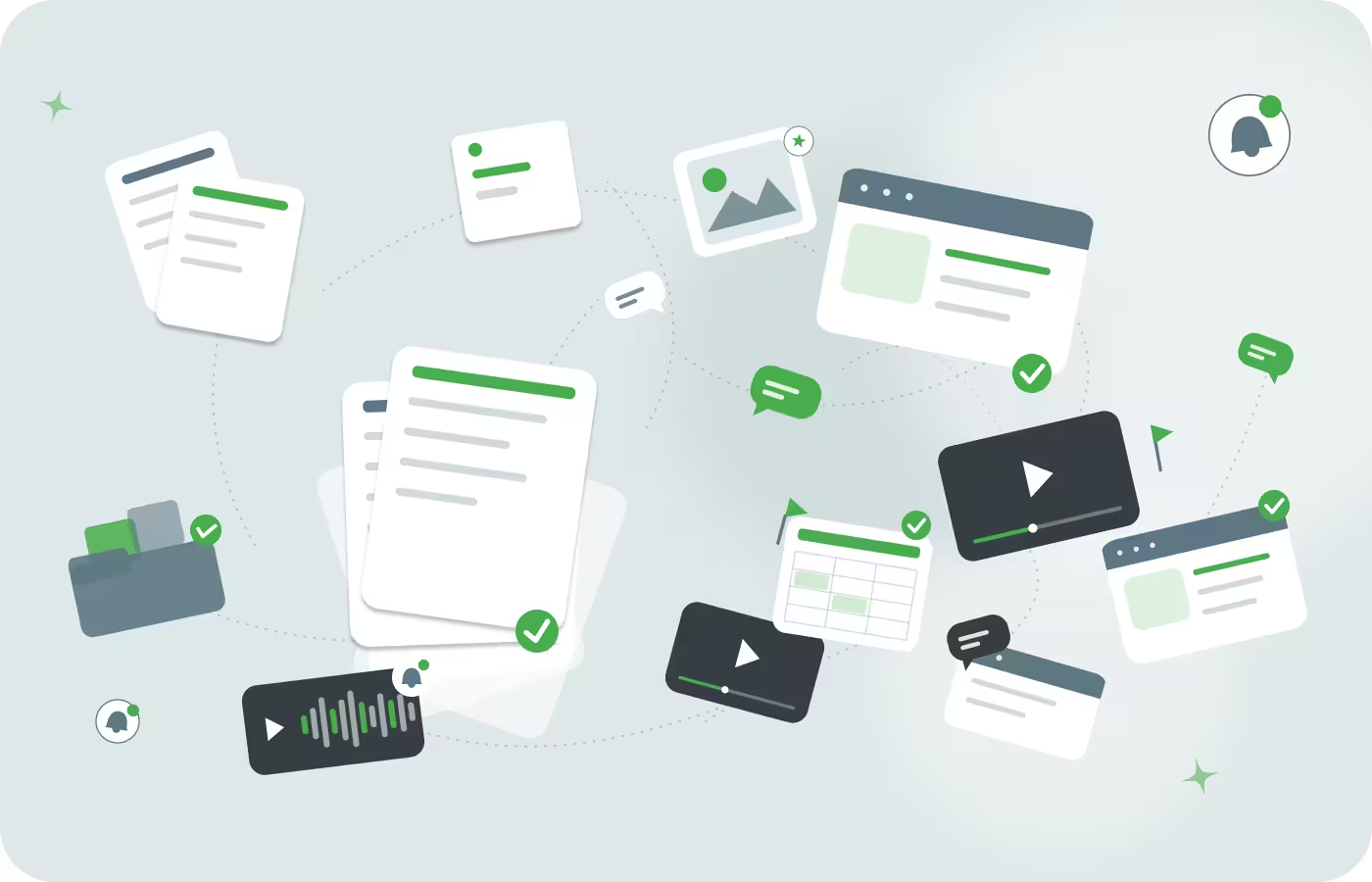
Information lives in the intranet or in documents, the latest draft is in another tool, feedback arrives via email and comments, brand guidelines are stored somewhere else, and additional applications are used to create the actual content. The problem isn’t necessarily any single tool. It’s the work between them: Communications teams constantly have to keep information, knowledge, people, feedback, and different process steps connected.
Once this coordination becomes a significant part of the work itself, it’s worth taking a closer look at agentic AI. AI agents can connect different steps of a communication process while drawing on relevant knowledge sources, defined requirements, and additional tools. The result is a more connected workflow without the communications team giving up control over content or decisions.
How many of these five signs do you recognize?
Not every communication process needs AI agents. But if several of these situations sound familiar from your day-to-day work, it may be worth looking beyond AI for individual tasks and considering the workflow as a whole. That’s often where the greater potential lies: less manual coordination, less repetitive work, and more time for the tasks where human experience, creativity, and judgment really matter.
The next step for AI in Corporate Communications therefore isn’t necessarily about writing even better prompts. It’s about integrating AI meaningfully into the processes communications teams manage every day.
.avif)

.avif)
.avif)
FAQs:
What are AI agents in Corporate Communications?
AI agents are AI-powered systems that can take on defined tasks and roles within a communication process. For example, they can process information, consider stakeholder perspectives, create content, or review communication assets while building on previous steps and existing context.
When does it make sense to use AI agents in Corporate Communications?
AI agents are particularly useful when communication processes involve many repetitive tasks, review cycles, stakeholders, and content adaptations. A typical sign is that creating the initial message isn’t what takes the most time – it’s the coordination, alignment, and execution that follow.
What tasks can AI agents take on in Corporate Communications?
AI agents can support tasks such as developing core messages, incorporating defined stakeholder perspectives, creating different communication assets, and reviewing content against specific requirements. Which tasks make sense depends on the individual communication process.
What is the difference between generative AI and AI agents?
Generative AI is often used for individual tasks, such as writing, summarizing, or revising content. AI agents, on the other hand, can take on defined tasks within a larger workflow and build on the results of previous steps. This allows AI to become part of a communication process rather than being used only for isolated prompts.
Do AI agents replace communications teams or human approvals?
No. AI agents can take on operational tasks, process information, and provide recommendations. Decisions, evaluations, and approvals can remain with the responsible members of the communications team and relevant stakeholders.
Our Speaker
When the prompt ends, the real work often begins
Generative AI has already made many tasks in Corporate Communications faster. A first draft, a summary, or a new content variation can now be created in minutes. But the most time-consuming parts of the communication process often come next: gathering information, involving stakeholders, incorporating feedback, aligning messages, and turning them into consistent content for different audiences and channels.
This is exactly where AI agents come in. Rather than supporting isolated tasks, they can take on defined roles and steps within a communication process and connect them into a more cohesive workflow. So how do you know whether your workflows are ready for this next step? These five signs are a good indicator.
1. The message is written quickly – but getting everyone aligned takes much longer
The first draft is ready. And that’s when the real work begins. Leadership wants to change the wording, Legal has questions, HR brings in another perspective, and Brand makes sure everything stays consistent with your corporate communication standards. Feedback arrives through different channels, new versions emerge, and what looked like a simple review quickly turns into multiple rounds of alignment.
If this sounds familiar, your biggest opportunity for efficiency may not be in content creation at all, but in what happens afterwards. This is where AI agents become interesting: Instead of using AI only to create the next draft, specialized agents can bring different perspectives and requirements into the workflow earlier. The communications team stays in control and decides which recommendations to act on.
2. The most important objections always come too late
The press release is nearly finished, the leadership update has been aligned, or the change communication is almost ready for approval – and then an objection comes in that requires substantial changes. Perhaps Legal identifies an important caveat, HR anticipates questions from employees, or Leadership wants to shift the focus.
These discussions can’t be avoided – nor should they be. What matters is when relevant perspectives enter the process. AI agents can help bring defined requirements and stakeholder perspectives into the workflow earlier, making it possible to identify potential conflicts or open questions before a piece of content has already gone through multiple review cycles. Final evaluation and approval still remain with the responsible people.
3. One message turns into ten assets – and suddenly into ten slightly different messages
A core corporate message rarely remains a single piece of content. It might become an intranet article, a leadership email, social posts, a newsletter, or a press release. With every new asset, the message is adapted – increasing the risk that facts, emphasis, or tone gradually start to diverge.
If your team spends a lot of time adapting content for different audiences and channels and then checking everything for consistency, that’s another strong signal. AI agents can use an aligned core message as a shared foundation for different communication assets, without requiring the central context to be rebuilt from scratch for every new format.
4. Your team keeps doing the same work over and over again
Many tasks in Corporate Communications repeat themselves, even when the actual content changes. Gathering context and requirements, reviewing existing information, adapting content for another channel, transferring feedback, or checking compliance with guidelines: Each individual step may seem manageable, but together they add up to a significant amount of manual work involving multiple people.
These recurring, clearly defined steps are particularly well suited to support from AI agents. Agents can work with specific roles, skills, knowledge, and requirements and take on individual tasks within a larger workflow. Instead of starting every new asset with a blank prompt, the relevant context remains part of the process.
5. Your communication process happens everywhere – just not in one place
Information lives in the intranet or in documents, the latest draft is in another tool, feedback arrives via email and comments, brand guidelines are stored somewhere else, and additional applications are used to create the actual content. The problem isn’t necessarily any single tool. It’s the work between them: Communications teams constantly have to keep information, knowledge, people, feedback, and different process steps connected.
Once this coordination becomes a significant part of the work itself, it’s worth taking a closer look at agentic AI. AI agents can connect different steps of a communication process while drawing on relevant knowledge sources, defined requirements, and additional tools. The result is a more connected workflow without the communications team giving up control over content or decisions.
How many of these five signs do you recognize?
Not every communication process needs AI agents. But if several of these situations sound familiar from your day-to-day work, it may be worth looking beyond AI for individual tasks and considering the workflow as a whole. That’s often where the greater potential lies: less manual coordination, less repetitive work, and more time for the tasks where human experience, creativity, and judgment really matter.
The next step for AI in Corporate Communications therefore isn’t necessarily about writing even better prompts. It’s about integrating AI meaningfully into the processes communications teams manage every day.
FAQs:
What are AI agents in Corporate Communications?
AI agents are AI-powered systems that can take on defined tasks and roles within a communication process. For example, they can process information, consider stakeholder perspectives, create content, or review communication assets while building on previous steps and existing context.
When does it make sense to use AI agents in Corporate Communications?
AI agents are particularly useful when communication processes involve many repetitive tasks, review cycles, stakeholders, and content adaptations. A typical sign is that creating the initial message isn’t what takes the most time – it’s the coordination, alignment, and execution that follow.
What tasks can AI agents take on in Corporate Communications?
AI agents can support tasks such as developing core messages, incorporating defined stakeholder perspectives, creating different communication assets, and reviewing content against specific requirements. Which tasks make sense depends on the individual communication process.
What is the difference between generative AI and AI agents?
Generative AI is often used for individual tasks, such as writing, summarizing, or revising content. AI agents, on the other hand, can take on defined tasks within a larger workflow and build on the results of previous steps. This allows AI to become part of a communication process rather than being used only for isolated prompts.
Do AI agents replace communications teams or human approvals?
No. AI agents can take on operational tasks, process information, and provide recommendations. Decisions, evaluations, and approvals can remain with the responsible members of the communications team and relevant stakeholders.
Our Speakers
Voices from our customers




.avif)