

AI agents in corporate communications: what’s behind the hype?
Communication that makes an impact
AI agents in corporate communications: what’s behind the hype?
How communications teams work with AI today
For many communications teams, working with AI has become part of everyday life. ChatGPT, Copilot, and other AI assistants help draft copy, summarize content, create translations, or develop ideas. This saves time and makes many day-to-day tasks easier.
But the basic principle is almost always the same: we give AI a specific task, it delivers a result, and we decide what happens next. We gather the relevant information. We write the next prompt. We move results from one system to another. We coordinate the next steps and manage approvals.
AI supports us along the way, but we still manage the overall process. With AI agents, that is beginning to change.
What exactly is an AI agent?
An AI agent is also an AI system. The key difference lies in how we work with it.
A traditional AI assistant responds to a specific instruction. An agent, on the other hand, can be given a broader goal and independently determine the steps needed to achieve it.
Put simply:
AI assistants help with individual tasks. AI agents help with entire processes.
Instead of defining every single step, we focus more on the desired outcome. Within a defined framework, the agent can then determine which steps are needed, draw on relevant information and context, use different systems or functions, and carry out multiple tasks in sequence.
This fundamentally changes the role of AI. Rather than simply providing answers, it can increasingly connect different steps and take action.
AI assistant vs. AI agent: what’s the difference?
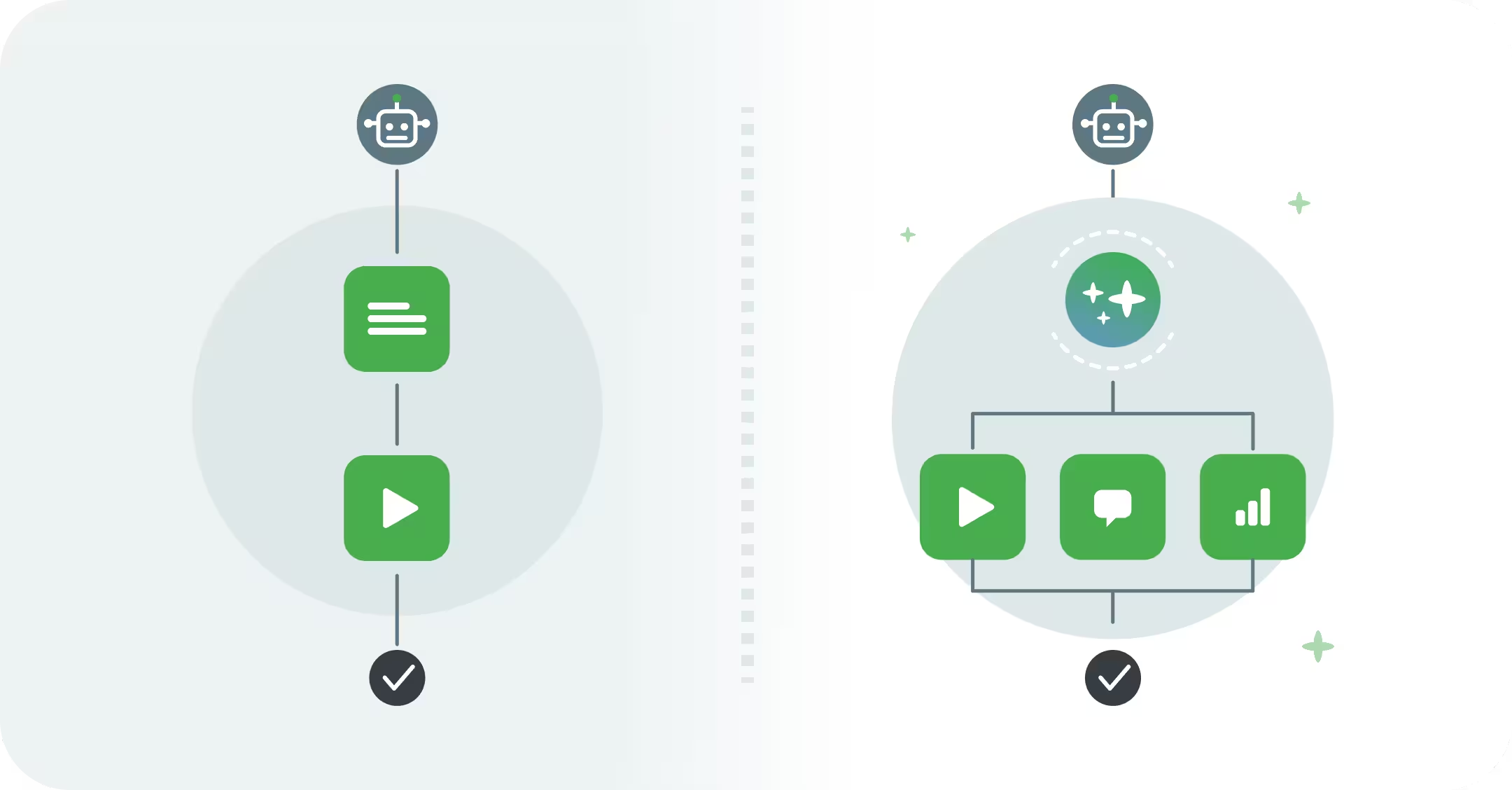
Let’s look at a typical corporate communications task: a new company initiative needs to be communicated internally. With an AI assistant, a communications team could upload the existing briefing and ask it to draft an intranet article.
Then comes the next prompt: make it shorter. Then: create a version for managers. And after that: translate it into English. Each individual step becomes faster, but a person still decides what needs to happen, provides the necessary context, and initiates every next step.
An agent, on the other hand, could be given a goal such as: “Prepare the internal communications for this initiative for our employees.” Based on a defined workflow, it could gather relevant information, follow communications guidelines, prepare content for different channels or audiences, initiate translations, and then provide the results for review and approval.
The goal remains the same. What changes is the work that happens between the starting point and the final result.
The key shift from tasks to workflows
This is where the real potential of agentic AI for businesses lies.
AI assistants have already made individual tasks significantly more efficient. A first draft can be created faster. A summary takes seconds rather than half an hour. Translations or different content versions can be generated with just a few prompts. But communication rarely consists of just one task.
Behind every publication, campaign, or internal announcement are numerous individual steps: finding information, creating content, incorporating existing materials, coordinating with stakeholders, adapting different versions, organizing translations, managing approvals, and preparing content for different channels. A lot of manual work still happens between these individual tasks.
Agentic AI operates at a different level. Instead of simply making one task faster, it can help connect multiple steps into an intelligent workflow. For corporate communications, this is where the much greater productivity gains could lie.
How can agentic AI support corporate communications?
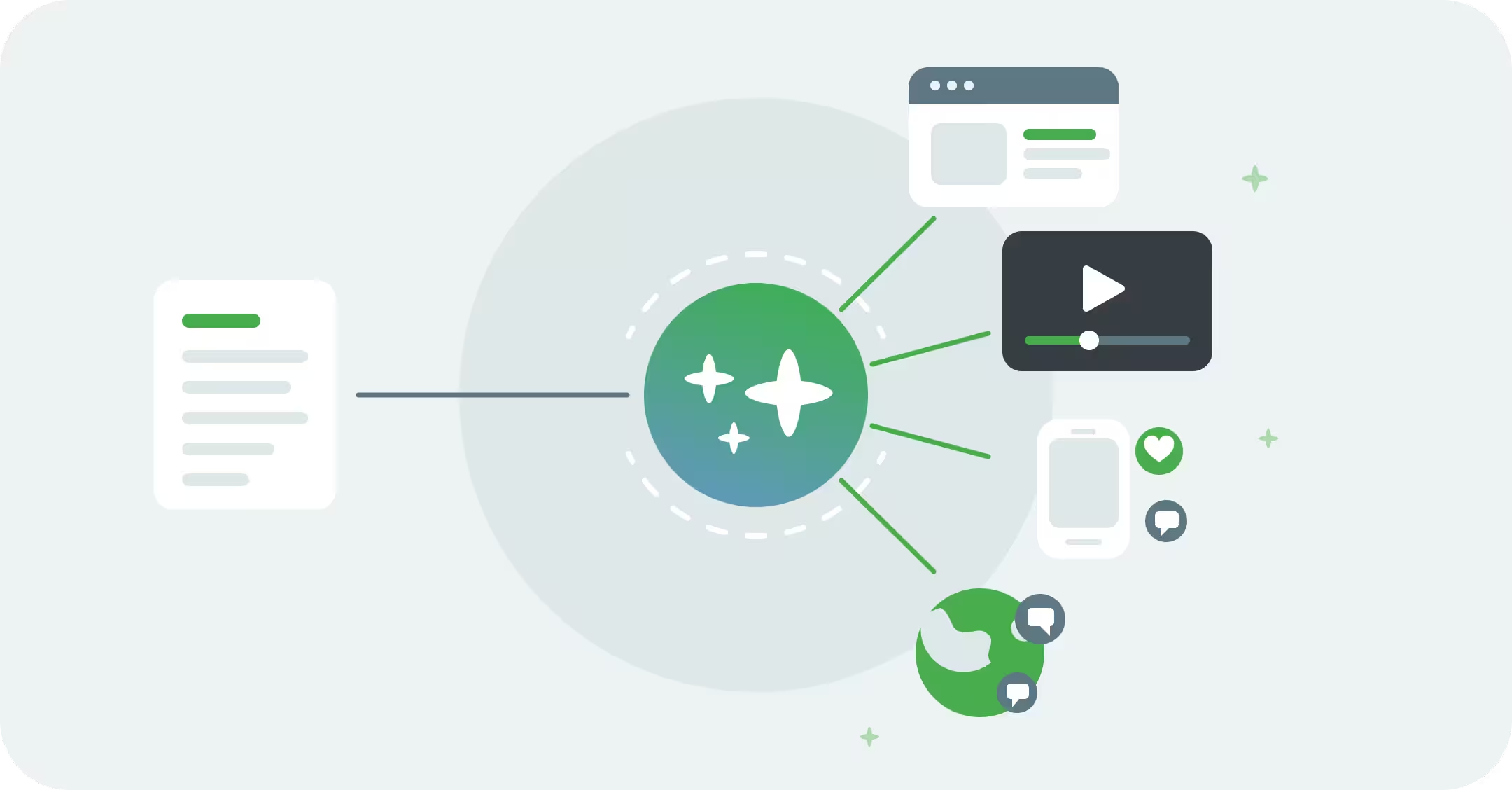
The potential goes far beyond producing copy faster. AI agents become particularly interesting when communications work is repetitive, complex, and spread across multiple systems or steps.
For example, an agent could search existing company information and pull together relevant content for a new communications task. It could prepare different versions for specific audiences, channels, or languages while taking defined communications guidelines into account.
Existing content could also be integrated into new workflows more intelligently. Instead of communications teams manually searching through archives, videos, documents, or previous publications, an agent could identify relevant content and make it available for the task at hand.
Or it could support a communications process across multiple stages, from the initial briefing and different content versions to preparing materials for approval. The key difference remains the same: an agent doesn’t just support a single step. It can connect multiple steps into one workflow.
So what does the human still do?
The more tasks AI can take on, the more obvious this question becomes. For corporate communications, the answer is particularly important. After all, good communication is about more than processes and content production.
Communications teams understand organizations, people, and situations. They recognize political and cultural sensitivities. They judge which message is appropriate at which moment. They develop strategies, set priorities, and take responsibility for what is communicated on behalf of the company.
Agentic AI is not meant to replace that responsibility. Instead, it can take on some of the operational work that consumes valuable time today, such as gathering information, handling repetitive steps, preparing content, or coordinating processes.
This changes the way humans and AI work together. People no longer need to carry out or initiate every single step themselves. Instead, they focus more on defining goals, rules, and quality standards and making the decisions that matter.
AI agents need clear boundaries
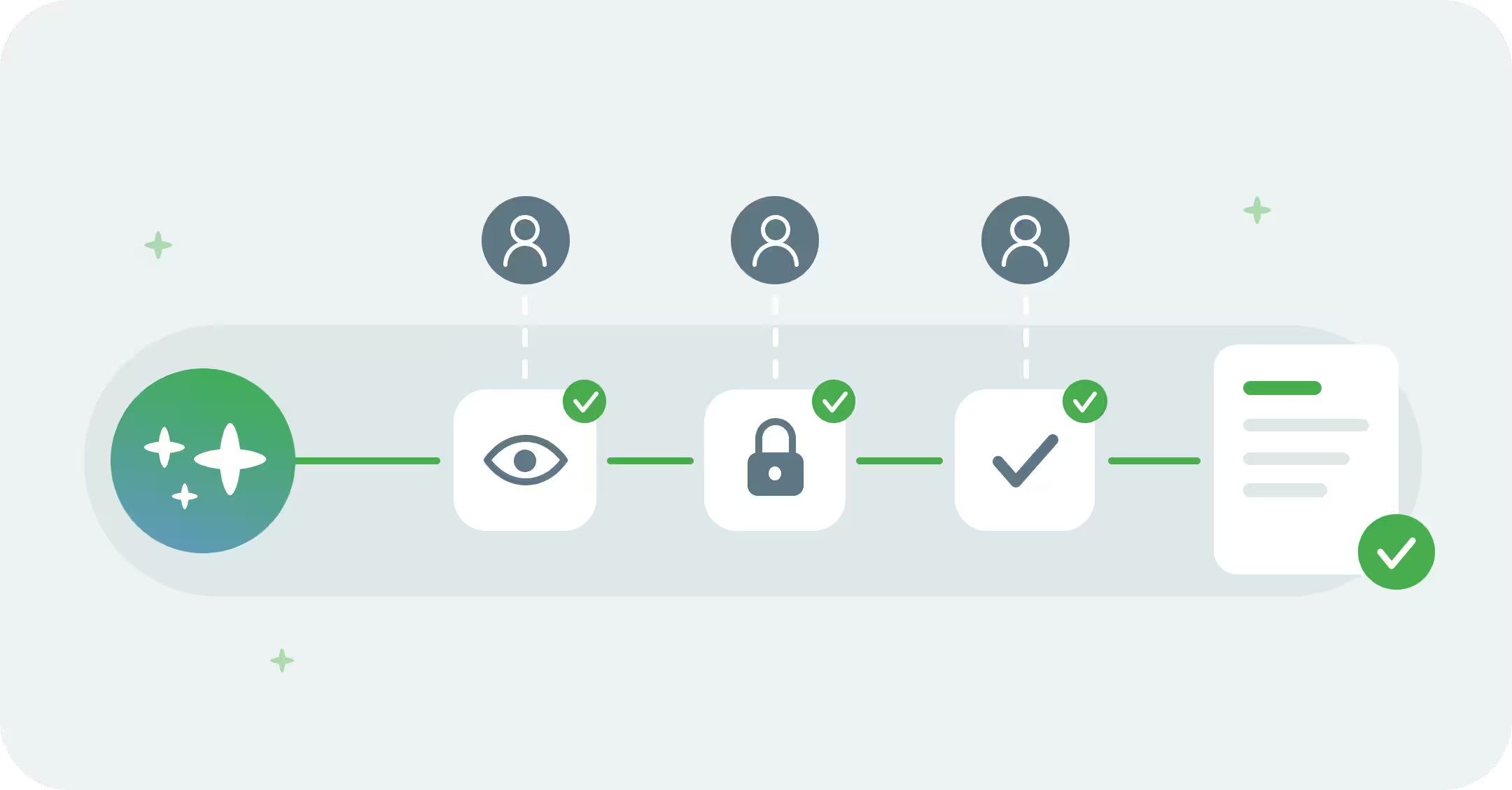
An agent that can act autonomously should not have unrestricted access to company data and systems or be able to publish content without appropriate controls.
Governance, data privacy, security, and clear responsibilities are particularly important in corporate communications. Companies need to define which information an agent can access, which actions it is allowed to perform, and where human approval is required.
For example, an agent could prepare communications materials and submit them for review, while the final approval of sensitive corporate communications remains with the responsible communications team.
Agentic AI therefore doesn’t mean giving up control. It means clearly defining what AI can handle independently and where humans remain in charge.
What does agentic AI mean for communications teams?
For communications teams, the focus will increasingly shift away from finding more and more individual AI use cases. The more important question is: Which of our communications processes still involve many manual, repetitive steps?
Where do teams spend a lot of time searching for information? Where is content transferred between systems? Where are similar versions created again and again? Where does coordination with multiple stakeholders take up valuable time? And where do employees have to manage numerous small tasks just to make sure the right message ultimately reaches the right audience? This is where AI agents can make a real difference.
This also means that companies will need to think beyond which AI tools they provide to their communications teams. They need to consider how AI can be meaningfully integrated into their broader communications infrastructure. After all, an agent becomes particularly valuable when it doesn’t operate in isolation, but can access relevant content, understand context, and support defined communications processes.
From AI as a tool to AI as part of the communications workflow
AI assistants have accustomed us to using AI as a tool: we ask a question or give it a task, and it provides support.
AI agents go one step further. They make it possible to integrate AI directly into communications processes and turn multiple manual steps into smarter, more connected workflows.
For corporate communications, this creates a significant opportunity. Not because AI will take over communications autonomously, but because communications teams can spend less time orchestrating individual tasks.
The next stage of AI may therefore be less about writing the perfect prompt and more about deciding which communications processes AI can take on and intelligently connect for us.
.avif)


.avif)
FAQs:
What is an AI agent in corporate communications?
An AI agent is an AI system that can work independently toward a goal within a defined framework. Unlike a traditional AI assistant, it doesn’t just respond to individual prompts. It can determine the necessary steps, connect them, and carry them out.
Do communications teams need technical expertise to use AI agents?
Not necessarily. Communications teams don’t need to understand the technology behind AI agents in detail. What matters more is understanding their own communications processes and deciding which tasks AI can take on, what information it needs, and where human approval is required.
Will AI agents replace corporate communications professionals?
AI agents are primarily designed to reduce operational and repetitive work. Strategy, creativity, judgment, and an understanding of the organization, its audiences, and sensitive communications situations remain core human responsibilities. The human role shifts more toward guiding, evaluating, and ensuring the quality of AI-supported work.
Are AI agents suitable for sensitive corporate communications?
That largely depends on how they are implemented. In corporate communications, access rights, data privacy, security, governance, and approvals need to be clearly defined. An agent could, for example, prepare content while sensitive messages are only published after human review.
How can communications teams get started with AI agents?
A good place to start is with existing communications processes that involve many manual and repetitive steps. Teams can identify where significant time is currently spent searching, coordinating, transferring information, or adapting content. This helps pinpoint where AI agents could provide meaningful support without immediately automating entire processes.
Our Speakers
How communications teams work with AI today
For many communications teams, working with AI has become part of everyday life. ChatGPT, Copilot, and other AI assistants help draft copy, summarize content, create translations, or develop ideas. This saves time and makes many day-to-day tasks easier.
But the basic principle is almost always the same: we give AI a specific task, it delivers a result, and we decide what happens next. We gather the relevant information. We write the next prompt. We move results from one system to another. We coordinate the next steps and manage approvals.
AI supports us along the way, but we still manage the overall process. With AI agents, that is beginning to change.
What exactly is an AI agent?
An AI agent is also an AI system. The key difference lies in how we work with it.
A traditional AI assistant responds to a specific instruction. An agent, on the other hand, can be given a broader goal and independently determine the steps needed to achieve it.
Put simply:
AI assistants help with individual tasks. AI agents help with entire processes.
Instead of defining every single step, we focus more on the desired outcome. Within a defined framework, the agent can then determine which steps are needed, draw on relevant information and context, use different systems or functions, and carry out multiple tasks in sequence.
This fundamentally changes the role of AI. Rather than simply providing answers, it can increasingly connect different steps and take action.
AI assistant vs. AI agent: what’s the difference?
Let’s look at a typical corporate communications task: a new company initiative needs to be communicated internally. With an AI assistant, a communications team could upload the existing briefing and ask it to draft an intranet article.
Then comes the next prompt: make it shorter. Then: create a version for managers. And after that: translate it into English. Each individual step becomes faster, but a person still decides what needs to happen, provides the necessary context, and initiates every next step.
An agent, on the other hand, could be given a goal such as: “Prepare the internal communications for this initiative for our employees.” Based on a defined workflow, it could gather relevant information, follow communications guidelines, prepare content for different channels or audiences, initiate translations, and then provide the results for review and approval.
The goal remains the same. What changes is the work that happens between the starting point and the final result.
The key shift from tasks to workflows
This is where the real potential of agentic AI for businesses lies.
AI assistants have already made individual tasks significantly more efficient. A first draft can be created faster. A summary takes seconds rather than half an hour. Translations or different content versions can be generated with just a few prompts. But communication rarely consists of just one task.
Behind every publication, campaign, or internal announcement are numerous individual steps: finding information, creating content, incorporating existing materials, coordinating with stakeholders, adapting different versions, organizing translations, managing approvals, and preparing content for different channels. A lot of manual work still happens between these individual tasks.
Agentic AI operates at a different level. Instead of simply making one task faster, it can help connect multiple steps into an intelligent workflow. For corporate communications, this is where the much greater productivity gains could lie.
How can agentic AI support corporate communications?
The potential goes far beyond producing copy faster. AI agents become particularly interesting when communications work is repetitive, complex, and spread across multiple systems or steps.
For example, an agent could search existing company information and pull together relevant content for a new communications task. It could prepare different versions for specific audiences, channels, or languages while taking defined communications guidelines into account.
Existing content could also be integrated into new workflows more intelligently. Instead of communications teams manually searching through archives, videos, documents, or previous publications, an agent could identify relevant content and make it available for the task at hand.
Or it could support a communications process across multiple stages, from the initial briefing and different content versions to preparing materials for approval. The key difference remains the same: an agent doesn’t just support a single step. It can connect multiple steps into one workflow.
So what does the human still do?
The more tasks AI can take on, the more obvious this question becomes. For corporate communications, the answer is particularly important. After all, good communication is about more than processes and content production.
Communications teams understand organizations, people, and situations. They recognize political and cultural sensitivities. They judge which message is appropriate at which moment. They develop strategies, set priorities, and take responsibility for what is communicated on behalf of the company.
Agentic AI is not meant to replace that responsibility. Instead, it can take on some of the operational work that consumes valuable time today, such as gathering information, handling repetitive steps, preparing content, or coordinating processes.
This changes the way humans and AI work together. People no longer need to carry out or initiate every single step themselves. Instead, they focus more on defining goals, rules, and quality standards and making the decisions that matter.
AI agents need clear boundaries
An agent that can act autonomously should not have unrestricted access to company data and systems or be able to publish content without appropriate controls.
Governance, data privacy, security, and clear responsibilities are particularly important in corporate communications. Companies need to define which information an agent can access, which actions it is allowed to perform, and where human approval is required.
For example, an agent could prepare communications materials and submit them for review, while the final approval of sensitive corporate communications remains with the responsible communications team.
Agentic AI therefore doesn’t mean giving up control. It means clearly defining what AI can handle independently and where humans remain in charge.
What does agentic AI mean for communications teams?
For communications teams, the focus will increasingly shift away from finding more and more individual AI use cases. The more important question is: Which of our communications processes still involve many manual, repetitive steps?
Where do teams spend a lot of time searching for information? Where is content transferred between systems? Where are similar versions created again and again? Where does coordination with multiple stakeholders take up valuable time? And where do employees have to manage numerous small tasks just to make sure the right message ultimately reaches the right audience? This is where AI agents can make a real difference.
This also means that companies will need to think beyond which AI tools they provide to their communications teams. They need to consider how AI can be meaningfully integrated into their broader communications infrastructure. After all, an agent becomes particularly valuable when it doesn’t operate in isolation, but can access relevant content, understand context, and support defined communications processes.
From AI as a tool to AI as part of the communications workflow
AI assistants have accustomed us to using AI as a tool: we ask a question or give it a task, and it provides support.
AI agents go one step further. They make it possible to integrate AI directly into communications processes and turn multiple manual steps into smarter, more connected workflows.
For corporate communications, this creates a significant opportunity. Not because AI will take over communications autonomously, but because communications teams can spend less time orchestrating individual tasks.
The next stage of AI may therefore be less about writing the perfect prompt and more about deciding which communications processes AI can take on and intelligently connect for us.

FAQs:
What is an AI agent in corporate communications?
An AI agent is an AI system that can work independently toward a goal within a defined framework. Unlike a traditional AI assistant, it doesn’t just respond to individual prompts. It can determine the necessary steps, connect them, and carry them out.
Do communications teams need technical expertise to use AI agents?
Not necessarily. Communications teams don’t need to understand the technology behind AI agents in detail. What matters more is understanding their own communications processes and deciding which tasks AI can take on, what information it needs, and where human approval is required.
Will AI agents replace corporate communications professionals?
AI agents are primarily designed to reduce operational and repetitive work. Strategy, creativity, judgment, and an understanding of the organization, its audiences, and sensitive communications situations remain core human responsibilities. The human role shifts more toward guiding, evaluating, and ensuring the quality of AI-supported work.
Are AI agents suitable for sensitive corporate communications?
That largely depends on how they are implemented. In corporate communications, access rights, data privacy, security, governance, and approvals need to be clearly defined. An agent could, for example, prepare content while sensitive messages are only published after human review.
How can communications teams get started with AI agents?
A good place to start is with existing communications processes that involve many manual and repetitive steps. Teams can identify where significant time is currently spent searching, coordinating, transferring information, or adapting content. This helps pinpoint where AI agents could provide meaningful support without immediately automating entire processes.
Our Speakers
Voices from our customers





.avif)


.avif "Corporate Communications 2027: Agentic AI Webinar")