Tutorial
AI & Corporate Comms

Published on

November 19th, 2026

How Do Neural Networks Work? Neurons, Layers and Weights Explained — AI Tutorial, Episode 2

Artificial neural networks are modelled on the human brain — but what actually happens inside one when it recognises a cat? Episode 2 opens the black box: neurons, layers, and the weights where all of an AI’s knowledge is quietly stored.
Foto von Dr. Ingo Hofacker, Geschäftsführer von movingimage, vor schwarzem Hintergrund

Dr. Ingo Hofacker

|
CEO
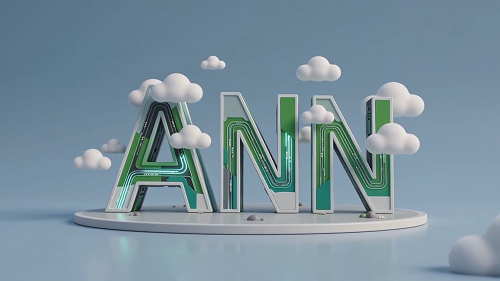
3D letters “ANN” for artificial neural network, with circuit patterns in movingimage green, standing on a round platform surrounded by white clouds — title card of episode 2 of the AI tutorial series

Table of contents:

Inside an artificial neural network: neurons, layers and weights

In episode 1 we saw that artificial neural networks (ANN) are the hot topic in AI — powerful, and usable across a remarkably broad set of domains. Episode 2 takes the lid off. movingimage CEO Dr Ingo Hofacker walks through what an ANN actually looks like and how a signal travels through it, step by step and without a single formula you need to memorise.

A mathematical model of the brain

An ANN is, in essence, a mathematical model of the human brain. For our purposes it is enough to remember that the brain is made of trillions of neurons connected to one another through synapses. When the brain is active, neurons talk to each other by sending current through those synapses to their neighbours. A few rays of light touch the neurons on your retina, electrical signals travel onwards until they reach the visual cortex — and bingo, the signal is classified as coming from your cat.

Layers: why they are called deep neural networks

Now build one. You start with neurons, and each ANN consists of a large number of layers of them — which is exactly why they are often called deep neural networks. Every neuron on one layer connects to some of the neurons on the next layer. But not all connections are equal: like in real life, some are stronger than others. That strength is called the weight, and depending on it the signal passing along the connection is either amplified or subdued.

How a signal travels from input to output

The initial signal — a vector of numbers — hits the input layer, the retina in our example. As it travels through the deeper layers it is constantly altered, until it eventually reaches the final layer, also called the output layer. Each time the vector passes from one layer to the next, it is modified by a multiplication with the weights in between those two layers. That is the whole mechanism.

Which raises the obvious question: this is not learning. The knowledge is already there, represented in the weights. So how do we arrive at those weights in the first place — how is a neural network actually trained? That is exactly where episode 3 picks up. Watch episode 2 above, then keep the momentum and move on to the next one.

cta grey backgroundmobile cta grey background

Grey backgroundmobile cta grey background

Trusted by leading companies

Voices from our customers

As part of our employer branding efforts, we focus entirely on the needs of our target groups. The seamless collaboration with movingimage enabled us to break new ground for the Charité. Together, we put together a digital event in a very short time. What an achievement!
Susanne Nitzsche, Head of Employer Branding & HR Digitalization at Charité
Susanne Nitzsche
Head of Employer Branding & HR Digitalization
Logo Charité
I always notice very quickly when working with service providers whether there is a fit. And when I have the feeling after 1-2 events that these service providers are becoming “friends”, I know that we agree and that it works together. And we have that feeling with movingimage.
Karl Turner, Owner & Strategic Consultant at turner & friends
Karl Turner
Owner & Strategic Consultant
turner & friends Logo
Thanks to the continuous development of its products, movingimage is also a constant source of inspiration for using new functions and thinking ahead on certain topics. And that is incredibly enriching for us.
Martina Herak, IT Business Analyst at Union Investment
Martina Herak
IT Business Analyst
Union Investment Logo
From our blog

Insights, tips, and inspiration

Stay up to date with the latest trends, best practices, and expert advice from the world of corporate video.
Visit the Knowledge Center
3D letters “ANN” for artificial neural network, with circuit patterns in movingimage green, standing on a round platform surrounded by white clouds — title card of episode 2 of the AI tutorial series
Tutorial
Upcoming
On-Demand

How Do Neural Networks Work? Neurons, Layers and Weights Explained — AI Tutorial, Episode 2
Read More
8 Trends Corporate Communications 2027 – two colleagues working together at a desktop computer
Blog Post
Upcoming
On-Demand

Corporate communications 2027: 8 trends at the intersection of AI, relevance and trust

Read More
Split-screen comparison of the VideoManager Pro video library and the Vimeo interface on a laptop
Blog Post
Upcoming
On-Demand

Vimeo vs. movingimage: Which platform is right for your enterprise?

Read More
Webinar key visual: "What Counts When Everyone Uses AI? 8 Trends in Corporate Communications 2027" with Dr. Ingo Hofacker, CEO of movingimage, on 01.12.2026, 11:00–11:45am
Webinar
Upcoming
On-Demand

Corporate Comms Trends 2027: What matters when everyone uses AI?

Read More
Video list in VideoManager Pro showing uploaded videos with status, language and channels in the sidebar
Product
Upcoming
On-Demand

New in VideoManager Pro: Smart Upload for easier video uploads

Read More
Enterprise livestreaming platform on a laptop with chat, access control, analytics and recording features
Blog Post
Upcoming
On-Demand

What should an enterprise livestreaming platform be able to do today?

Read More
Get in touch

Meet our video experts

Our experts are here to support you. Book a free consultation to discuss your specific use case and discover the best video solution for your needs.
Contact us